
By Lilly Maier, Prins Fellowship (2025-2026)
Anita Lasker-Wallfisch: The Cellist of Auschwitz
At over one hundred years old, Anita Lasker-Wallfisch is the last living member of the Auschwitz Women’s Orchestra.
Anita Lasker-Wallfisch was born Anita Lasker in 1925 in Breslau, a city that was German at the time but is part of Poland today. She grew up in an educated Jewish family. Anita started playing the cello at a young age. Anita and her sister Renate were deported to the Auschwitz concentration camp in December 1943.
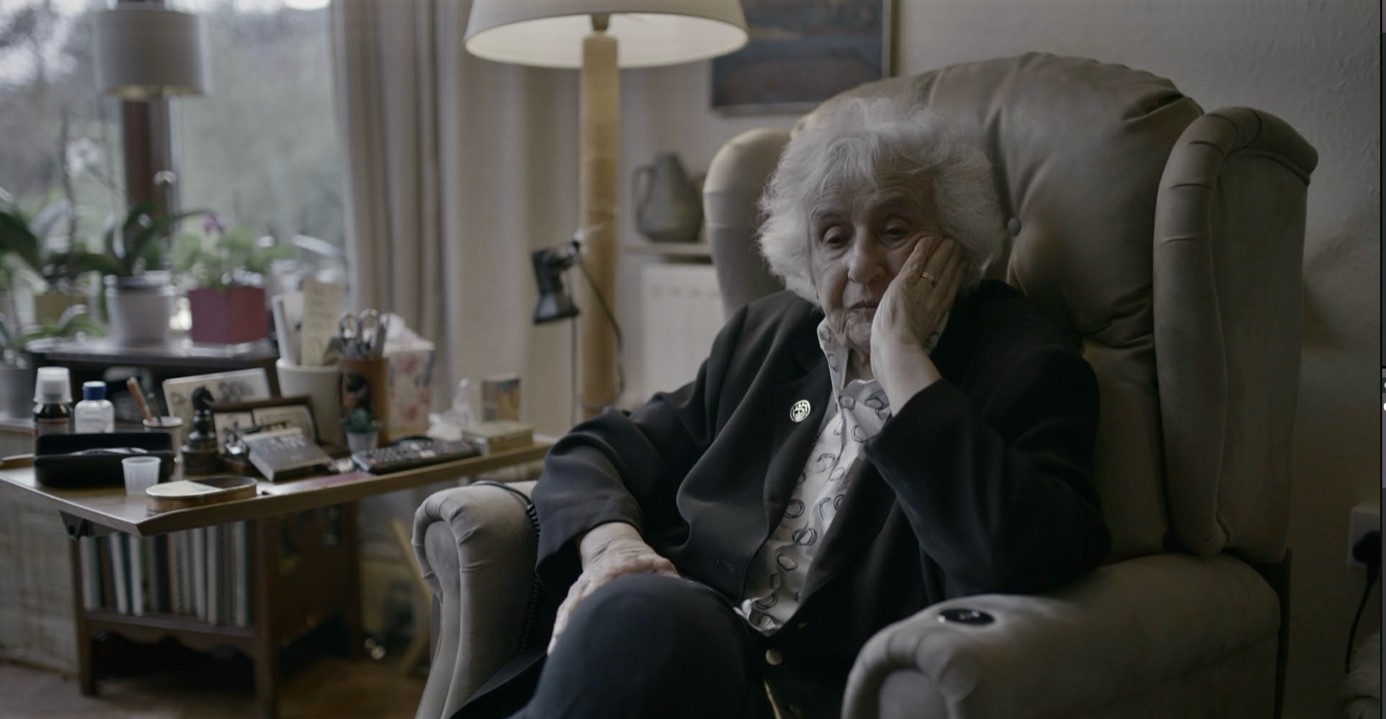
Anita Lasker-Wallfisch in the documentary “The Last Musician of Auschwitz.” Two Rivers Media/CJH.
In Auschwitz, at least six orchestras and one choir existed. Anita became a cellist in the Women’s Orchestra. The musicians were prisoners who were forced to rehearse and perform for hours daily. The prisoner musicians realized that being part of the orchestra increased their chances of survival.
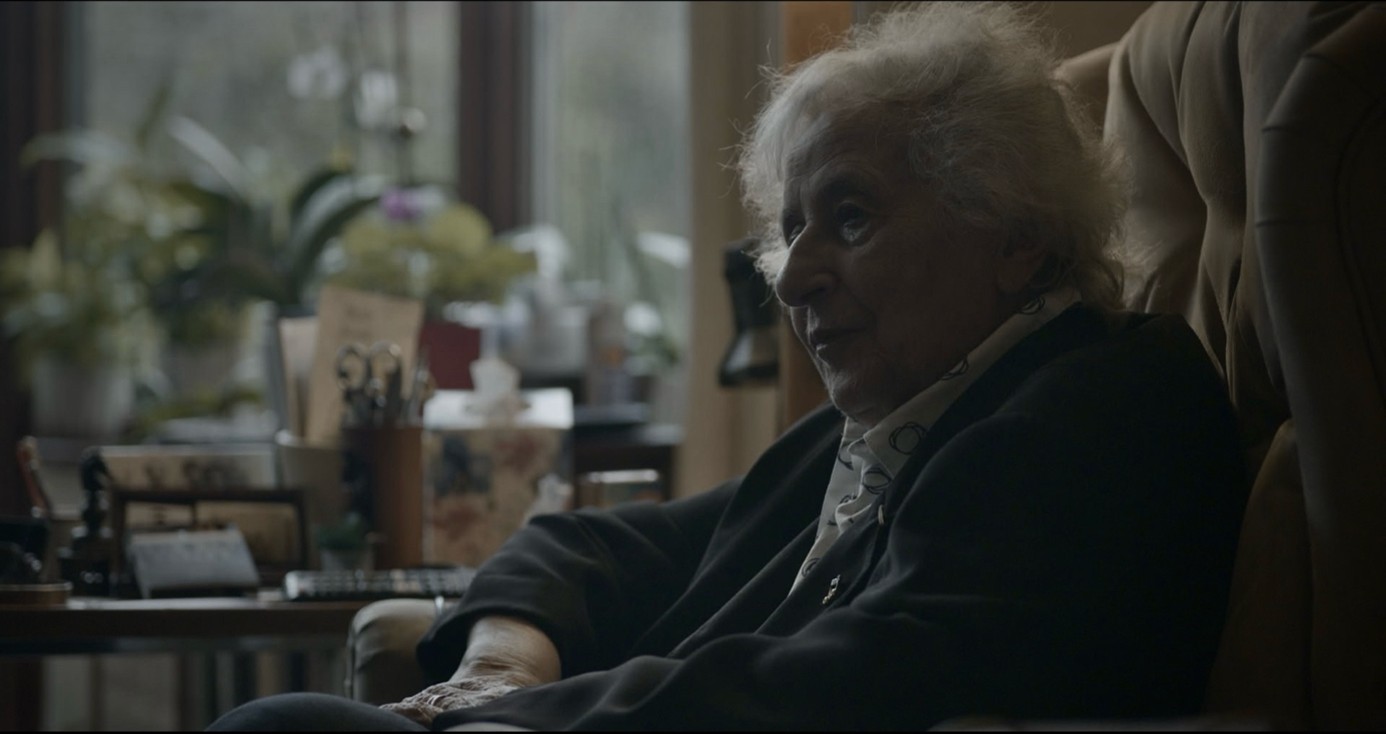 Anita Lasker-Wallfisch in the documentary “The Last Musician of Auschwitz.” Two Rivers Media/CJH.
Music served different functions in the camp. In Auschwitz I and II, the orchestras were required to play in the morning and evening as other prisoners left for and returned from forced labor. The prisoners’ footsteps provided the rhythm, and the music was meant to keep them moving forward. The prisoner musicians also had to perform concerts for elite Nazis and SS guards or play impromptu music if someone from the SS came into their block (barrack).
All the musicians from the women’s orchestra lived together in the same block, where they spent their days rehearsing. Most of the other prisoners they met while at Auschwitz were other musicians.
The Auschwitz Women’s Orchestra usually performed as a group, but sometimes musicians were forced to perform by themselves for high-ranking SS officers. Once, Anita was forced to play Träumerei (Dreams) in front of the infamous Nazi doctor, Josef Mengele. This piece of music is one of the most beloved and best-known works by the German composer, Robert Schumann (1810-1856). As an important figure of the Romantic era, the Nazi regime tried to claim Schumann’s music as a symbol of “true German” culture, using it to promote a romanticized vision of the past.
In November 1944, Anita was deported to the Bergen-Belsen concentration camp. There was no orchestra at the camp and no additional protections. The camp was liberated by British forces in April 1945.
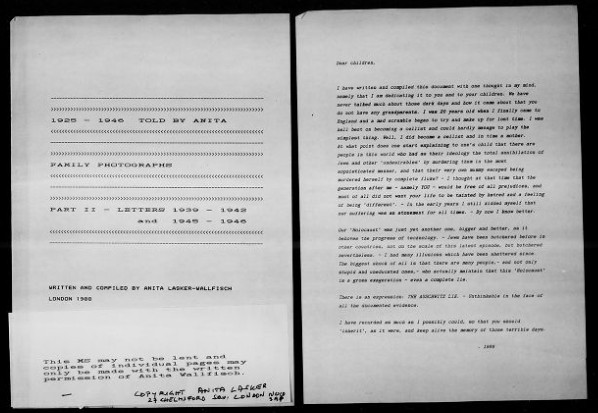
1925 – 1946 Told by Anita. ME 305, Collection of Leo Baeck Institute.
The Leo Baeck Institute at CJH holds a digitized collection of autobiographical writings and translated letters by Lasker-Wallfisch.
The following is an excerpt of a text called 1925 – 1946 Told by Anita which Lasker-Wallfisch wrote in London in 1988 and donated to the Leo Baeck Institute in 1990. In the paragraph, she talks about the ways in which playing the Cello helped her to mentally survive the Auschwitz concentration camp:
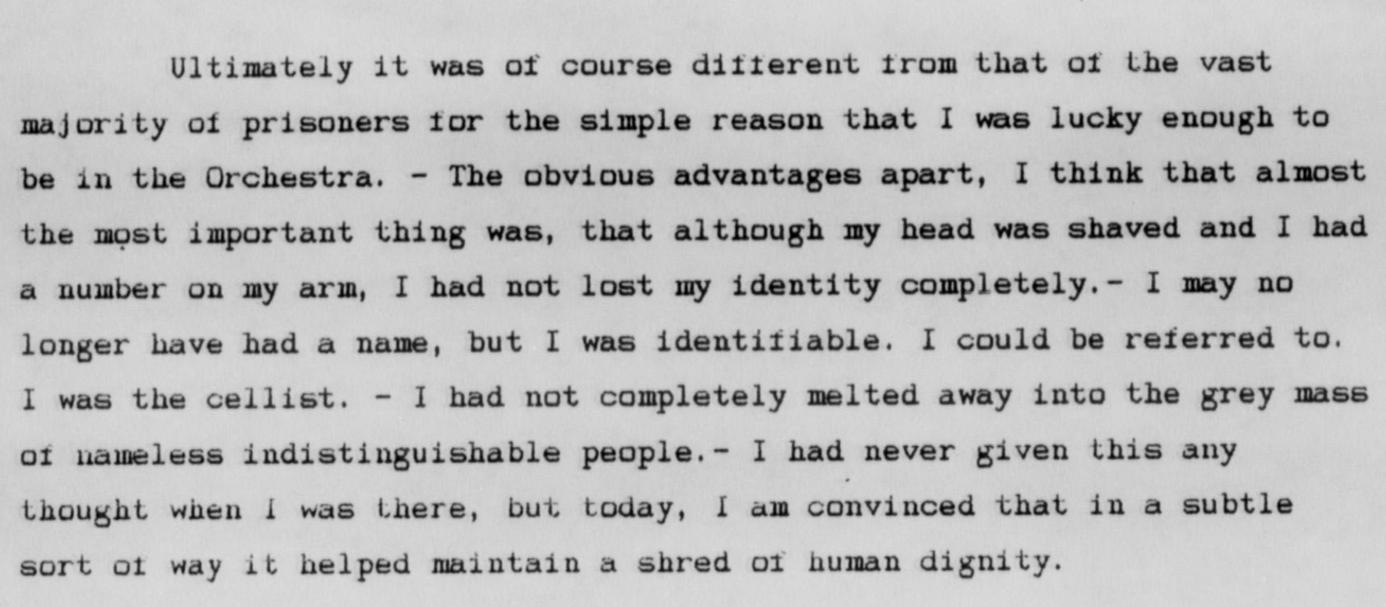 1925 – 1946 Told by Anita, page 48. ME 305, Collection of Leo Baeck Institute.
After being liberated, Anita Lasker studied music in the United Kingdom and co-founded the English Chamber Orchestra. In the UK, she married pianist Peter Wallfisch. Most of their children and grandchildren became musicians as well.
As the last living member of the Auschwitz Women’s Orchestra, Anita Lasker-Wallfisch was portrayed in the moving 2025-documentary The Last Musician of Auschwitz.
Related materials can be found in the following CJH curriculum:
The Last Musician of Auschwitz
Further Reading at CJH:
Inherit the Truth: A Memoir of Survival and the Holocaust / Anita Lasker-Wallfisch