

Sukkot. Arthur Szyk (1894-1951). 1948. New Canaan, Connecticut. Painting, tempera and ink on paper. c/o Yeshiva University Museum.
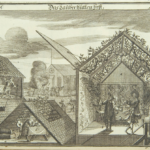
Illustration from Juedisches Ceremoniel, a German book published in 1724. c/o Leo Baeck Institute.
Etrog container decorated with depictions of lulav and etrog. Artist unknown. 19th century. c/o Yeshiva University Museum.
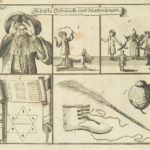
Lulav (palm twig) and Etrog (citrus fruit) used during Sukkot. Illustration from Juedisches Ceremoniel, a German book published in 1724. c/o Leo Baeck Institute.
by Ilana Rossoff, Reference Services Research Intern, Center for Jewish History
This post is part of the Jews and Social Justice Series. To view all posts in the series, click here.
At the same time that they were coordinating post-war refugee relief in Europe, Jewish Labor Committee members began to take an active role in supporting African-American-led efforts to advocate for civil rights…
by Kevin Schlottmann,Levy Processing Archivist, Center for Jewish History
The pamphlet “The Protocols of the Elders of Zion,” an anti-Semitic forgery that outlined alleged plans for Jewish world domination, appeared with disturbing regularity throughout the 20th century, and unfortunately is sometimes cited even today as an authentic document.
The work has been thoroughly debunked many times, perhaps most famously…
Letter from Willy Hellpach to Martha Kubatzki on Reichstag stationery, 1930
Out of the Archives An Epistolary Romance by Catherine Greer, Archival Processing Fellow, Center for Jewish History
I spent two weeks at the Center for Jewish History as a Graduate Archival Processing Fellow. The twelve-day program provided me with a wealth of theoretical knowledge, hands-on experience in archival processing–and an…